
Age Helps Frame the Choice
- Repair is usually the sensible first step for a newer refrigerator with one failed part and a sound cabinet.
- On a mid-life refrigerator, weigh the proposed repair against other wear and the condition of the cooling system.
- Replacement deserves discussion when a long-serving refrigerator has a major sealed-system fault or needs a control board that is no longer made.
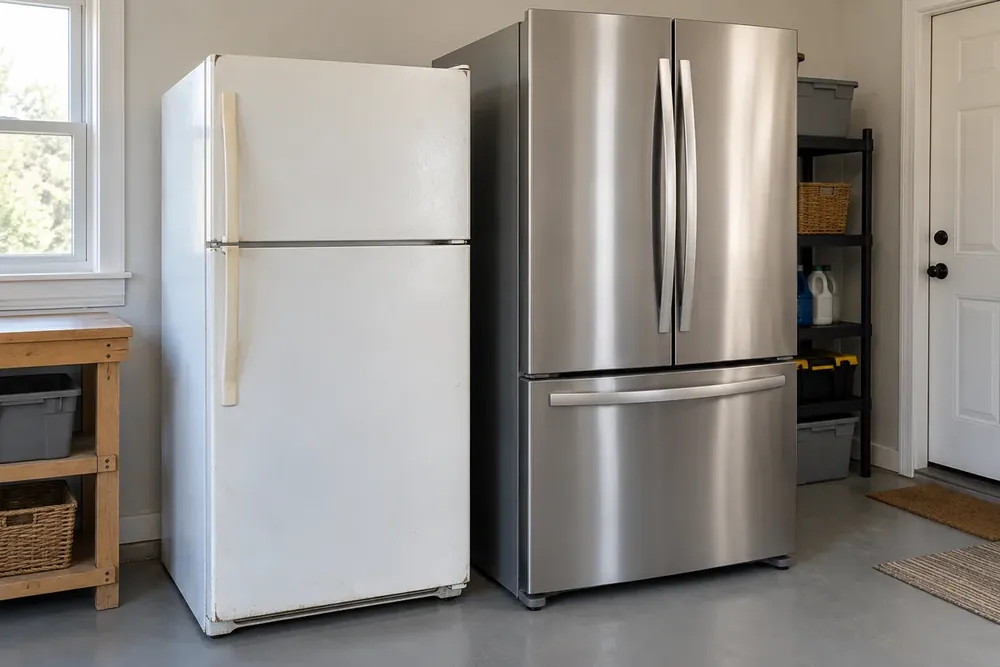
Repair Decisions Depend on More Than Age
Repair usually deserves consideration when the fault is limited and the rest of the appliance remains sound. Replacement becomes more relevant when structural damage, major assembly failure or missing parts leave little practical benefit in further work. Your technician's findings give the decision a firmer basis than age alone.
Newer
Newer appliances commonly favor repair because one failed part can interrupt an otherwise working machine. A refrigerator with a faulty fan may still have a sound cooling system and cabinet. A washer may need a fill valve or drain pump, and a dryer may need a belt or door switch. Those are jobs for your technician, not instructions to dismantle the appliance.
An oven that has stopped heating might need an igniter or another replaceable component. With a newer dishwasher, consider repair before deciding to replace an otherwise sound machine over a pump fault. A single symptom does not establish that a main assembly has failed.
Mid-life
Mid-life appliances need a closer look at related wear and previous trouble. Deciding whether to repair or replace a washing machine means looking beyond the pump to the tub, supports and other main assemblies. A repair makes more sense when the remaining machine is sound and the fault has a clear remedy.
For a refrigerator, compare repair vs. the need to replace a machine with several developing faults. A fan problem and a major cooling failure should not lead to the same recommendation. With a washer, repair or replace decisions also depend on whether repeated problems share an underlying cause.
Long-serving
Long-serving machines bring major damage and parts availability to the front of the discussion. A failed sealed system on a refrigerator, a cracked washer tub or a rusted-through dryer drum can make replacement more practical. A control board that is no longer made can limit the options even when the cabinet looks good.
For a dryer, repair vs. the decision to replace turns on the damage found: a belt differs from a drum rusted through. The same age category can contain machines in very different condition. A well-kept older appliance with an available small part may still be worth repairing.
Each Appliance Has a Different Turning Point
The turning point is the part that failed and the condition of everything around it. The comparisons below describe typical discussion points, rather than a decision made without inspection.
| Appliance | Usually worth repairing when | Usually time to replace when |
|---|---|---|
| Refrigerator or freezer | A fan, seal or control fault is isolated and parts exist | Major cooling failure affects a long-serving machine with other deterioration |
| Washer | A pump, fill valve or door switch fails in an otherwise sound machine | The tub is cracked or major damage affects several assemblies |
| Dryer | A belt or other available wear part is the main problem | The drum is rusted through or extensive damage makes repair impractical |
| Dishwasher | A replaceable valve or pump accounts for the fault | Structural damage or unavailable essential parts prevents a useful repair |
| Oven or range | An igniter, switch or other replaceable component has failed | Serious deterioration or an unavailable essential board limits repair |
| Microwave | A replaceable component can restore a sound unit safely | Major damage or missing essential parts rules out a suitable repair |
Parts Support Can Set the Limit
Parts availability can decide whether a technically possible repair is practical. Your technician uses the model to identify a compatible replacement and explain any ordering needs. For the refrigerator, choosing repair or deciding to replace also means considering whether the needed part resolves the whole fault.
Call to describe the symptoms and previous work; appliance technicians in our network assess the machine and explain the proposed repair and its price before you decide. Read any visible code during the conversation. Keep internal covers closed, including the microwave case, and leave component testing to your technician.
Disposal Follows the Repair Decision
Disposal arrangements depend on the city and the appliance once replacement is chosen. Mesquite's Appliance Collection page lists refrigerators, dishwashers, washers, dryers and stoves for pickup and directs residents to schedule collection with Solid Waste. Garland's Appliance Recycling page describes curbside collection and recycling-center drop-off, with appliances kept separate from brush and other bulky waste.
Dallas's Brush and Bulky Item Collection page lists stoves, washers and dryers among accepted items, while excluding refrigerators, freezers and other appliances containing coolant from that collection. Use the relevant city's disposal route when arranging removal after replacement.
U.S. EPA safe-disposal requirements make the final disposer responsible for ensuring refrigerant is recovered from refrigerators and freezers before final disposal. Refrigerant recovery belongs in the disposal arrangements; leave the cooling system sealed. The repair price factors page covers the work that shapes the repair side of the comparison.