Changes Worth a Call
- Appliance warning signs include cooling loss, longer cycles, new grinding sounds and water appearing outside the machine during normal use.
- Stop using an appliance that leaks or overheats; keep a warming refrigerator or freezer closed while calling about the problem.
- The same symptom may justify a small repair on a newer appliance or a replacement discussion on a long-serving machine.
Warning Signs Across Kitchen and Laundry Appliances
Changes in normal cooling, heating, drainage or sound are reasons to call about an appliance. The tables name possible causes, not diagnoses; your technician checks the machine to identify the actual fault. None of the observations or details below is needed before calling.
Refrigerator Warning Signs
| Sign | Likely cause | What to do |
|---|---|---|
| Food compartment feels warm | Fan, defrost or cooling-system fault | Keep the doors shut and call. |
| Frost repeatedly builds up | Door-seal or defrost trouble | Call about where frost appears. |
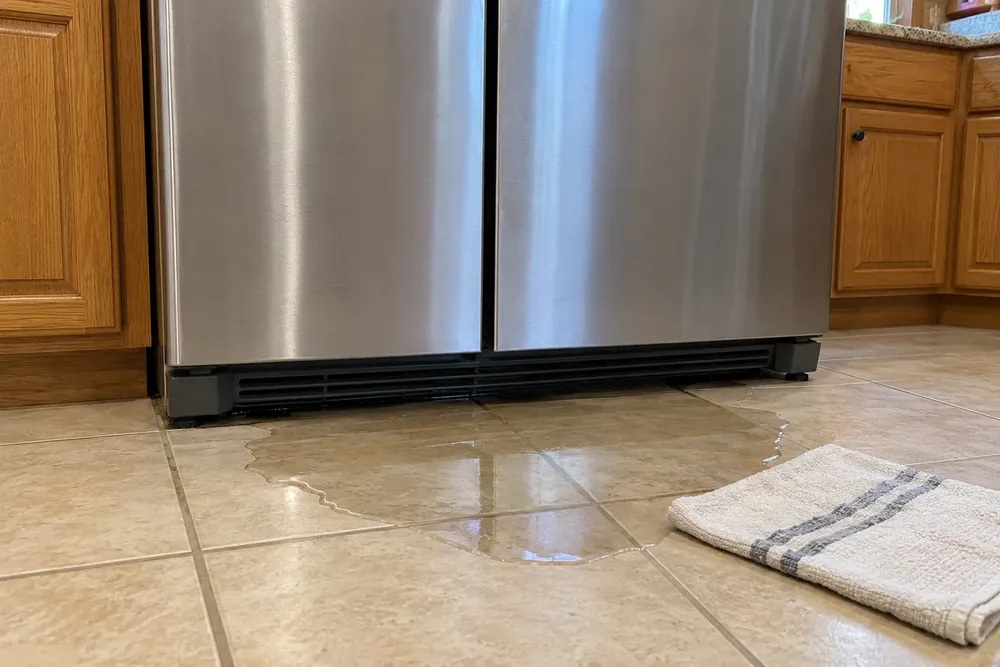
| Water collects on the floor | Drain or water-valve problem | Stop using it and call. |
| Repeated clicking replaces normal running | Starting-component or compressor fault | Call and describe the sound. |
Reasons for a refrigerator not cooling include airflow, defrost and sealed-system faults, so a warm compartment alone does not identify the repair. A newer refrigerator often has an isolated fault worth repairing; mid-life condition helps weigh parts replacement, while a major cooling failure on a long-serving unit can favor replacement. How much it takes to fix a refrigerator that is not cooling depends on the failed part, repair access and cooling-system work; one of our local appliance repair partners will discuss the scope and price for your decision.
Freezer and Ice Maker Warning Signs
| Sign | Likely cause | What to do |
|---|---|---|
| Frozen packages begin to soften | Cooling or defrost fault | Keep the freezer closed and call. |
| Heavy frost returns | Door leakage or defrost failure | Call about the recurring frost. |
| Ice production stops | Fill-valve, ice maker or cooling fault | Call and describe the ice problem. |
| Water leaks near the ice maker | Fill or water-path problem | Stop using the ice maker and call. |
| Ice repeatedly clumps together | Temperature fluctuation or water leakage | Call about the melting and refreezing. |
Loss of cooling or ice production often warrants repair diagnosis on a newer unit, where a valve or control may be the main fault. Mid-life equipment needs seals and cooling performance weighed together; on a long-serving freezer, extensive sealed-system damage makes replacing the appliance a more likely option.
Washer Warning Signs
| Sign | Likely cause | What to do |
|---|---|---|
| Water spreads outside the washer | Seal, hose or pump leak | Use the washer's controls to end the cycle, then call. |
| Water remains after the cycle | Drainage or pump fault | Stop using the washer and call. |
| New banging develops during spinning | Suspension or drum trouble | Switch it off at its controls. |
| Cycle stops with a displayed code | Model-specific fault requiring diagnosis | Call and read out the exact code. |
For anyone wondering who to call for a leaking washing machine, call about the leak now and describe when the water appears. Repair is usually the first consideration on a newer washer, while a mid-life machine's pump or suspension wear needs weighing against its overall condition. Major drum or tub damage on a long-serving washer can move replacement ahead of repair.
Dryer Warning Signs
| Sign | Likely cause | What to do |
|---|---|---|
| Clothes stay damp after normal drying | Restricted airflow or heating fault | Stop using the dryer and call. |
| Drum turns without heat | Element, igniter or control fault | Call about the loss of heat. |
| New squealing accompanies tumbling | Worn rollers, pulley or belt | Stop the dryer at its controls. |
| Dryer feels unusually hot | Airflow restriction or temperature-control fault | Stop using it and call. |
How much work is needed to repair a dryer that is not heating depends on whether the fault involves a heating part, airflow or controls. A newer dryer commonly merits repair diagnosis; mid-life belts and supports need consideration alongside the heat fault, while major drum damage on a long-serving machine can favor replacement. The U.S. Fire Administration identifies neglected cleaning as a dryer fire risk, so repeated overheating deserves attention rather than another drying cycle.
Dishwasher Warning Signs
| Sign | Likely cause | What to do |
|---|---|---|
| Water pools after a cycle | Drain restriction or pump fault | Stop using it and call. |
| Water escapes under the door | Seal, filling or circulation problem | Switch it off at its controls. |
| Dishes stay dirty after normal loading | Spray or circulation fault | Call about the wash result. |
| New grinding begins during washing | Debris or pump wear | Stop the cycle and call. |
A newer dishwasher with a failed pump or valve usually deserves a repair assessment. Mid-life circulation and seal wear need weighing against the condition of the tub; a cracked tub or several major faults on a long-serving unit can make replacement the stronger option.
Oven and Range Warning Signs
| Sign | Likely cause | What to do |
|---|---|---|
| Food repeatedly cooks unevenly | Element, sensor or fan trouble | Call about the changed cooking pattern. |
| Oven fails to heat | Igniter, element or control fault | Turn the oven off using its controls, then make the call. |
| Glass surface or oven door cracks | Damaged glass assembly | Stop using the appliance and call. |
| Gas odor appears | Possible gas leak | Touch no switch; leave and call 911 or the gas utility from outside. |
A newer oven with one failed heating part generally merits repair; a mid-life range needs its cooking zones and door assessed together. Multiple heating faults or unavailable controls on a long-serving range may make replacement more practical. For gas odor, Atmos Energy's gas safety advice calls for leaving immediately and contacting help from a safe distance; contact appliance repair from safety afterward.
Microwave Warning Signs
| Sign | Likely cause | What to do |
|---|---|---|
| Runs but does not warm food | Heating-component or control fault | Stop using it and call. |
| Turntable stops moving | Coupling or motor trouble | Call about the stopped turntable. |
| Sparks appear inside | Unsuitable cookware or internal damage | Stop using the microwave. |
| Door does not close firmly | Latch, hinge or door damage | Stop using it and call. |
A newer microwave may justify replacement of one failed switch or motor; mid-life condition and parts availability help weigh the repair, while major cavity damage on a long-serving unit can favor replacement. Leave the case closed and stop using a microwave with door damage, consistent with the FDA's microwave safety instructions.
If a display shows an error code, read the exact characters out during the call; meanings vary by model. Describe a symptom without trying to interpret the code or recreate a fault.